

Sponsored by


Enjoying & Teaching the Works of C. S. Lewis
A Conference for Educators
Do your students read The Chronicles of Narnia, Mere Christianity, or other books by C. S. Lewis? Do you love teaching these works in your classroom or homeschool? Would you enjoy the opportunity to connect with and hear from fellow educators who spend time in the same books?
This spring, the Triangle Classical Forum will host a unique all-day Saturday conference on Enjoying & Teaching the Works of C. S. Lewis. While the conference is open to C. S. Lewis lovers of all kinds, it is especially for educators who teach or would like to teach C. S. Lewis’s novels and works of Christian apologetics.
Date: Saturday, March 21, 2026, 8:30 AM – 4:30 PM
Location: Cary Christian School, 1330 Old Apex Rd, Cary, NC 27513
Cost:
$50 General Admission
$35 Teacher (Classroom/Homeschool) Discounted Rate
$25 College Student Discounted Rate
Digital recordings of all talks will be made available to ticket purchasers after the conference. If you are unable to attend but interested in digital recordings, join our mailing list to stay up-to-date on when they will become available.
Plenary Sessions
Annie Crawford – Out of the Silent Planet: C. S. Lewis, Science Fiction, and the Baptized Imagination
Andrew Lazo – “Nothing So Nice”: C. S. Lewis and the Joy of Reading
Christine Norvell – Teaching Gems from C. S. Lewis
Workshops
Winston Brady – The Condition of Man: A Look at the Conditioners in The Abolition of Man
Josh Herring – Teaching Unity: C. S. Lewis’s Ransom Trilogy
Jen Lederer – Delighting in The Lion, the Witch, and the Wardrobe While Encouraging Children to Discover Christ
James Manuel – Classroom Apologetics: A Mere Christianity Approach
Daniel Payne – Reading the Right Books: Narnia as a Foundation for Children’s Literature
Kristen Rudd – “Bid the Geldings Be Fruitful”: The Platonic Soul in Narnia
Micah Terhune – “And Still the Light Grew”: Lessons on Human Nature from The Great Divorce
Plenary Speakers

Annie Crawford
Out of the Silent Planet: C. S. Lewis, Science Fiction, and the Baptized Imagination
Modern culture trains us to see the world as disenchanted—profane, empty, and malleable to our will—yet, as C. S. Lewis argued, when we imagine the world as mere meaningless matter, we soon see ourselves as meaningless, too. In Out of the Silent Planet, Lewis creates science fiction that re-enchants the modern imagination, carrying his readers to the unfallen world of Malacandra where wonder, moral clarity, and delight in creation remain alive. This plenary session explores how to teach this cosmic fairy tale in the classical classroom, offering discussion strategies, writing assignments, and cross-disciplinary connections that help students recover a sacred, meaningful vision of the cosmos.
Annie Crawford is a cultural apologist, classical educator, and lifelong student of C. S. Lewis with an MA in Cultural Apologetics from Houston Christian University. She teaches upper-school Humanities and apologetic courses at Vine Classical Hall in Austin, Texas, and offers online C. S. Lewis classes for The Symbolic World and the Discovery Institute. A popular conference and podcast speaker, Annie is passionate about helping classical educators and homeschool parents form students who love truth, goodness, and beauty through the reading of Great Books.
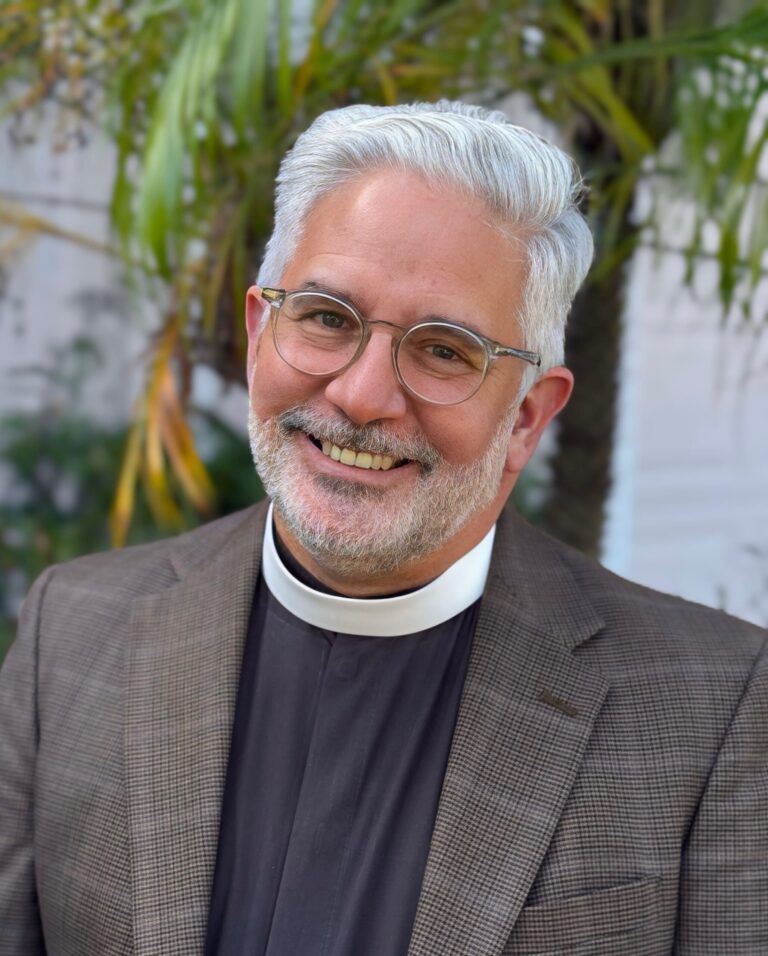
Andrew Lazo
“Nothing So Nice”: C. S. Lewis and the Joy of Reading
The Rev’d Dr. Andrew Lazo (MA, MDiv) is an independent scholar, speaker, and writer on the life and work of C. S. Lewis. He is currently writing a long-awaited critical study of Till We Have Faces, and has edited a number of essay collections on Lewis. He also co-hosts the popular weekly C. S. Lewis podcast Pints with Jack, and serves as a Distinguished Lecturer in the Romantic Theology program at Northwind Seminary. He ministers as an Episcopal priest at St. John’s, Tampa, and is the glad husband of speaker and bestselling author Dr. Christin Ditchfield Lazo.

Christine Norvell
Teaching Gems from C. S. Lewis
C. S. Lewis’s works are woven with bits of anecdotes and commentary on the teaching life, many times through the eyes of a student. Through his experiences, Lewis speaks of several processes: unlearning, irrigating, knowing less, stirring the imagination, and humbling ourselves as teachers. Through an array of his fiction and nonfiction, his gentle manner brings encouragement to all of us in our teaching journey.
Christine Norvell has taught in classical, home school, and public education for over twenty-five years. With an MA in Humanities from Faulkner University’s Great Books program and a BS in English Education, she taught and served as Upper School Dean at Sager Classical Academy in Arkansas, at Regent Preparatory in Oklahoma, and online with Kepler Education. Christine is a former senior contributor at The Imaginative Conservative and writes for a number of academic and literary websites. She is the author of Till We Have Faces: A Reading Companion (2020) and The Sycamore-Fig Tree: Biblical Botany and Scriptural Truths (Stone Tower Press, 2026).
Workshop Speakers

Winston Brady
The Condition of Man: A Look at the Conditioners in The Abolition of Man
C. S. Lewis’ The Abolition of Man begins with a green book, examines natural law from almost every culture and religious tradition on Earth, and ends with a chilling depiction of population control and eugenics. Lewis’ argument moves step-by-step from progressive education to the rise of a mysterious group of bureaucrats Lewis identifies only as “the Conditioners.” But who are these Conditioners?
Most likely, they were Progressive-era bureaucrats. They believed they could reshape human nature to achieve cherished Progressive social goals. Yet, this quick identification promotes a profound examination: how does big government, secular, Progressive political programs, and population control come together?
Such ideas have consistently worked to undermine individual rights and freedoms, the influence of Christianity in the public square, and the very idea of what a human being is and ought to be. In this presentation, Winston Brady will walk through the warnings C. S. Lewis provides at the close of The Abolition of Man and how his wise counsel still speaks to us today.
Winston Brady received a BA in English from the College of William and Mary, an MDiv from Southeastern Baptist Theological Seminary, and an MBA from the University of North Carolina at Chapel Hill. Winston serves as the Director of Curriculum and Thales Press.

Dr. Josh Herring
Teaching Unity: C.S . Lewis’s Ransom Trilogy
The three novels that make up Lewis’s Ransom Trilogy are so distinct from one another that it becomes difficult to determine what unifies these novels. This breakout session argues that the character Elwin Ransom is the unifying thread, and that in this character Lewis offers a three-step vision for change within the protagonist: awakening, participating, and cultural transformation. Dr. Herring will lay out his thesis, and then demonstrate it with several passages. Those who attend this session will get a taste of all three novels in this beautiful trilogy.

Jen Lederer
Delighting in The Lion, the Witch, and the Wardrobe While Encouraging Children to Discover Christ
For the Christian teacher who is very familiar with this famous story, there is a danger in teaching The Lion, the Witch, and the Wardrobe. We eagerly jump to explain allegory, preach the gospel, and transform Narnia to real life. C. S. Lewis originally intended The Lion, the Witch, and the Wardrobe to be a children’s story first and foremost, a vivid fantasy set in a thoroughly-crafted world. However, many of us are tempted to simplify the book down to an allegory for Christ rather than allowing the story to be told on its own. English Literature in the Sixteenth Century explains that Lewis disagreed with readers who could not “bring themselves to believe that the poet cares about the shepherds, lovers, warriors, voyages, and battles. They wrongly assume that these elements must be only a disguise for something more ‘adult.’” Let’s return to Lewis’ original intent and talk about how to teach the book well by intentionally giving space for students to naturally and independently make comparisons to Christ while delighting in the magic of Narnia!

Daniel Payne
Reading the Right Books: Narnia as a Foundation for Children’s Literature
Before his encounter with the dragon, Lewis tells us that Eustace had read “none of the right books.” Many classical educators can easily name the wrong books, but identifying the right books is a subtler task. Thankfully, The Chronicles of Narnia can serve as a lamp-post to guide teachers and students through the world of children’s literature. But what makes them the right books? And how should we teach these stories so that they can “appear in their real potency?” In this talk, we will turn to Lewis’ own words to see how The Chronicles of Narnia can shape our understanding of the right books and provide a foundation for reading them well.
Daniel Payne is an experienced classical educator devoted to cultivating virtue, wisdom, and wonder in young students. He holds a bachelor’s in Elementary Education and a master’s in Educational Leadership. After spending a number of years in classical classrooms, he joined Veritas School in Richmond and now serves as the Head of Lower School, where he especially enjoys guiding students at the beginning of their journey in the liberal arts tradition. Daniel has developed classical curriculum for several books in The Chronicles of Narnia and frequently teaches on the works of C. S. Lewis in professional and parochial settings. Off campus, he hosts and produces The Lamp-post Listener, a podcast focused on classic works of children’s literature. This work has given him the chance to learn alongside many remarkable scholars and enthusiasts, including Douglas Gresham, the stepson of C. S. Lewis. Daniel lives in Virginia with his wife and children.

James Manuel
Classroom Apologetics: A Mere Christianity Approach
C. S. Lewis, in his work Mere Christianity, employs apologetics by examining everyday issues and events on a global scale, such as World War II, to argue for the importance of morality and the existence of God. This approach of looking at modern problems and the need for epistemic justification can be seen in modern debates about justice and equality, which raise many of the questions that many modern students think about, which can help open the conversation about the existence of God. The presentation will demonstrate how C. S. Lewis’s Mere Christianity method can still be used in a classical Christian or even a secular setting to show the need for God’s existence. I will present an overview of Mere Christianity and then discuss how it can be applied in the classroom by using a Mere Christianity approach.
James Manuel is a North Carolina native. He currently resides in Burlington with his wife and two children. He has been teaching in higher education for approximately two years, having begun his career in several private grade schools. He currently serves as an instructor at Central Carolina Community College, Alamance Community College, Cape Fear Community College, Grand Canyon University, Trine University, Southeastern University, the Norwalk Conservatory of the Arts, and Houston Christian University. He began his educational journey at Lee University, where he earned his undergraduate degree in theology. He holds a master’s degree in theology from Denver Seminary and a master’s degree in philosophy from Biola University. He is one course away from completing his PhD in Humanities at Faulkner University, with a concentration in philosophy. His research interests include the Great Books of the Western world and the classical works of thinkers such as Plato, Kant, David Hume, Aristotle, Kierkegaard, and Nietzsche. He also maintains particular interest in philosophy of mind, C. S. Lewis, Edmund Burke, and Russell Kirk. His dissertation examines C. S. Lewis and the argument for reason, addressing the Anscombe controversy.

Kristen Rudd
Bid the Geldings Be Fruitful: The Platonic Soul in Narnia
In The Abolition of Man, Lewis writes about the dangers of a disordered soul. In his Chronicles of Narnia series, he creates a cast of characters with both ordered souls and disordered souls: He gives us men with and without chests. But what does this even mean and how does he do this? In this talk, Kristen Rudd will present the idea of Plato’s tripartite soul and demonstrate how Lewis’ beloved characters embody this important concept.
Kristen Rudd homeschooled her two children for fifteen years. She teaches online literature and writing classes for high school students and leads the CiRCE Institute’s Atrium on Dante’s Divine Comedy. She holds an MAT in classical education from the Templeton Honors College at Eastern University and is a CiRCE-certified master classical teacher. When she has spare time, Kristen writes fiction and poetry, lifts heavy weights, eats tacos, reads a lot, and contemplates getting a PhD. She and her family have lived in the Triangle since 2014.

Micah Terhune
"And Still the Light Grew": Lessons on Human Nature from The Great Divorce
Chapter 2 of The Great Divorce serves as Lewis’ thesis statement for the whole book. It describes how the bus takes off and soars into the sky, the passengers watching as the Gray Town (hell) falls away below them. The bus ascends into a vast expanse of light, a “cruel light” which reveals the passengers as “distorted and faded.” The narrator examines himself in a mirror at the end of the bus and, presumably, sees his own distorted and faded nature.
When we make The Great Divorce into a conversation about heaven, hell, eschatology, and salvation we lose the point of the book. Lewis uses this novel as a mirror. He is holding this mirror up to each of us, revealing our own distorted and faded nature. In a world that increasingly turns a blind eye toward our own corruption, The Great Divorce boldly shines a light on our sin nature. Using this book in the classroom allows us the opportunity to pose and answer the question, “Why would anyone choose hell?”
Micah Terhune teaches theology and apologetics at Cary Christian School, where he has taught for the past nine years. He received a BA in Biblical Studies from Cedarville University and a MA in New Testament from Cornerstone Theological Seminary. Micah has been married to his wife Kristen for eleven years, and they have an eight-year-old son named Elias. As an extrovert he enjoys time spent with family and friends, even if they aren’t doing anything in particular. Otherwise, he loves reading, board games, video games, and the beautiful game of soccer.